Research: Product Roadmaps

The final step in the research process is about prioritizing jobs and developing a product roadmap. — Product Roadmaps Now that you’ve understood the desired outcomes from your customer’s perspectives, you must decide on which of these your product/service will serve. The premise behind this thought is that “not all jobs are created equal”. The desired outcome of…

Research: Outcomes & Jobs to be Done

The third step in the research process is about translating your user’s needs into desired outcomes and job stories. — Outcomes & Jobs to be Done What are they? At this stage, your goal is to translate your customer needs research into a series of desired outcomes and jobs-to-be-done. The desired outcome describes what your customer is trying to…

Research: Needfinding

The second step in the research process is about discovering your target user’s needs and translating these into customer insights. — Needfinding Needfinding is the investigative process by which you uncover your customer’s needs. Empathy is the core value in the process of needs discovery. Only through empathy can you take on your customer’s perspective and understand both their expressed…

Research: Product Vision

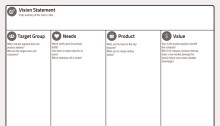
Research The research process can broken down into the following steps:  Product Vision Needfinding Outcomes & Jobs to be Done Product Roadmap In this post, I’ll touch upon how to set a product vision. Product Vision Your product vision is your hypothesis of the customer’s need and the impact you want to deliver. At this stage, you want…

Customer Lifecycle Management as a Framework

Viewing the Customer Lifecycle as a framework allows you to apply a cross-functional approach to building and nurturing customer relationships. The driving idea is that every individual in the organizations plays a significant contribution over the course of the customer lifecycle. Understanding how to match the your team’s roles to your customer touchpoints is fundamental…

Customer Lifecycle Management as an Architecture

A Customer Lifecycle Architecture should be flexible and dynamic, so that it is easily adaptable to the industry and customer segment you serve.  First, understand that the customer lifecycle has different stages. Each stage characterizes a different point in the customer relationship, where the customer’s needs, aspirations, and mentality differ. As the customer progresses to…

Customer Lifecycle Management as a Process

The customer lifecycle can be broken down into the following process:   Offering: You and your team build an offering, either a product or service, which satisfies a customer needs. Awareness: You build awareness in the market of your company’s offering with the goal of increasing your exposure, brand recognition and sales opportunity. Purchase: You…

Why Manage the Customer Lifecycle?

Why must the customer’s lifecycle be managed? The answer comes down to a few variables: Customer Acquisition Costs Customer Lifetime Value Customer Retention Negative Churn First, the customer is the lifeline of any enterprise. You can build a great product, staff a great team, but if you have no customers, your business will surely fail.…

What is CLM?

What is CLM? Customer Lifecycle Management (CLM) is the process by which your relationship with your customer is carefully managed and nurtured throughout its engagement with your business. The nature of different CLM frameworks vary due to the differences in industry, business and customer segment. Nonetheless, the fundamentals are the same. CLM is about taking…

The Pitfalls of Customer Lifecycle Management

Existing Customer Lifecycle Management (CLM) methodologies fail to provide businesses with effective tools to successfully manage customer relationships. But if there’s so much material on the subject… why reinvent the wheel?  There are a couple problems with existing CLM frameworks that I want to address. — Pitfall 1: Heavy Sales Focus Most customer lifecycle management frameworks…