The Goal of This Post
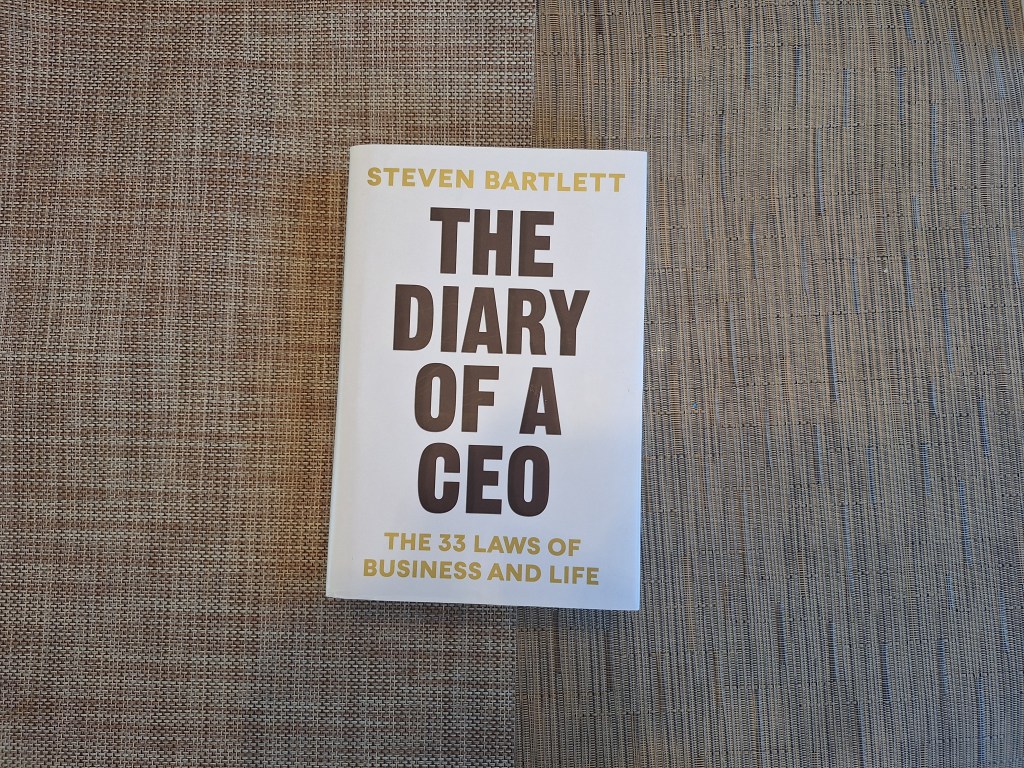
This post is a synthesis from the book The Diary of a CEO, by Steven Bartlett, sharing some of the key lessons and wisdom around how to thrive in your personal and professional life.
I hope you enjoy it!
PILLAR I: THE SELF
This pillar is about you.
Your self-awareness, self-control, self-care, self-conduct, self-esteem, and self-story.
The self is the only thing we have direct control over; to master it, which is no easy task, is to master your entire world.
1. Fill you five buckets in the right order
- What you know (your knowledge)
- What you can do (your skills)
- Who you know (your network)
- What you have (your resources)
- What the world thinks of you (your reputation)
An investment in the first bucket (knowledge) is the highest-yielding investment you can make. Because when knowledge is applied (skill), it inevitable cascades to fill your remaining buckets.
—
2. To master it, you must create an obligation to teach it
- Having something to lose, “skin in the game”, is fundamentally what an obligation is.
- Having skin in the game raises the stakes of your learning by building deeper psychological incentives.
- Create an obligation to think, write and share your ideas consistently.
You don’t become a master because you’re able to retain knowledge. You become a master when you’re able to release it.
—
3. You must never disagree
- If you want to keep someone’s brain lit up and receptive to your point of view, you must not start your response with a statement of disagreement.
- Introduce your rebuttal with what you have in common, what you agree on, and the parts of their argument that you can understand.
- First listen so that the other person feels ‘heard’, then make sure you reply in a way that makes them feel ‘understood’.
You can predict the long-term health of any relationship by whether each conflict makes the relationship stronger or weaker.
—
4. You do not get to choose what you believe
Asking someone to explain the detail and logic underpinning their strongly held beliefs is a profoundly powerful way to reduce their conviction. This works for limiting beliefs too. If someone is struggling with their self-belief and believes they’re worthless, having them explain in as much detail as they can, why they feel that way, and questioning their responses, is an effective way to get them to relinquish that belief.
- The fundamental beliefs you hold about yourself, you hold about others, about the world – you’ve ‘chosen’ none of them.
- The things you believe are fundamentally based on some form of primary evidence.
- The most powerful force of all is first-party evidence from our own five physical senses.
- Beliefs change when a person gets new counteracting evidence that they have a high degree of subjective confidence in.
Unchallenged limiting beliefs are the greatest barrier between who we are and who we could be.
—
5. You must lean in to bizarre behavior
When you don’t understand something, someone, a new idea or technology, and when that new thing challenges our identity, intelligence or livelihood, instead of listening and leaning in – in an attempt to ease our cognitive dissonance – we too often lean out and attack them.
- ‘Leaning out’ = being so arrogantly sure that you’re right that you refuse to listen, learn and pay attention to new information.
- Resolving a problem often requires enough humility to disregard your initial hypothesis and listen to what the market is telling you.
- Your most important beliefs should not be binary.
Innovation disrupts because it’s different. By definition, it should look weird, it should feel unconventional, it should be misunderstood.
—
6. Ask, don’t tell – the question/behavior effect
- Asking is better than telling when it comes to influencing your own or another’s behavior.
- Questions, unlike statements, elicit an active response – they make people think.
- Starting the question with “will” implies ownership and action.
Ask questions of your actions, and your actions will answer.
—
7. Never compromise your self-story
Self-concept is our personal belief of who we are. It inclues beliefs about our capabilities, our potential and our competence… Individuals with a positive self-story will be more optimistic, persevere for longer in the face of adversity, handle stress better and achieve their goals more easily.
- Everything you do – with or without an audience – provides evidence to you about who you are and what you’re capable of.
- Every decision we make writes another line of powerful first-party evidence into our self-story.
- Prove to yourself, at every opportunity you get, that you have what it takes to overcome the challenges of life.
What we believe about ourselves creates our thoughts and feelings, our thoughts and feeling determine our actions, and our actions create our evidence.
To create new evidence you must change your actions.
—
8. Never fight a bad habit
- The brain associates reward with action, so you need to pair an action with a reward.
- Replace the final step of the habit loop with a much less addictive reward.
- Focus on the basics. Keep your stress levels low. Get a good night’s sleep.
The best way to create a new habit is by finding new rewards, healthier rewards and less addictive rewards, but nonetheless making sure you are still rewarding yourself along the way.
—
9. Always prioritise your first foundation
- It’s what you do right now, today, that determines how your mind and body will operate 10, 20, and 30 years from now.
- There is no greater form of gratitude than taking care of yourself.
- “Those who think they have no time for exercise will sooner or later have to find time for illness.” – Edward Stanley
Always prioritise your health. Your health is your first foundation.
All content credit goes to the author(s). I’ve shared the bits I’ve enjoyed the most and found most useful.
Cheers ’till next time! Saludos!
Alberto


 Beto's Blog