The Goal of This Post
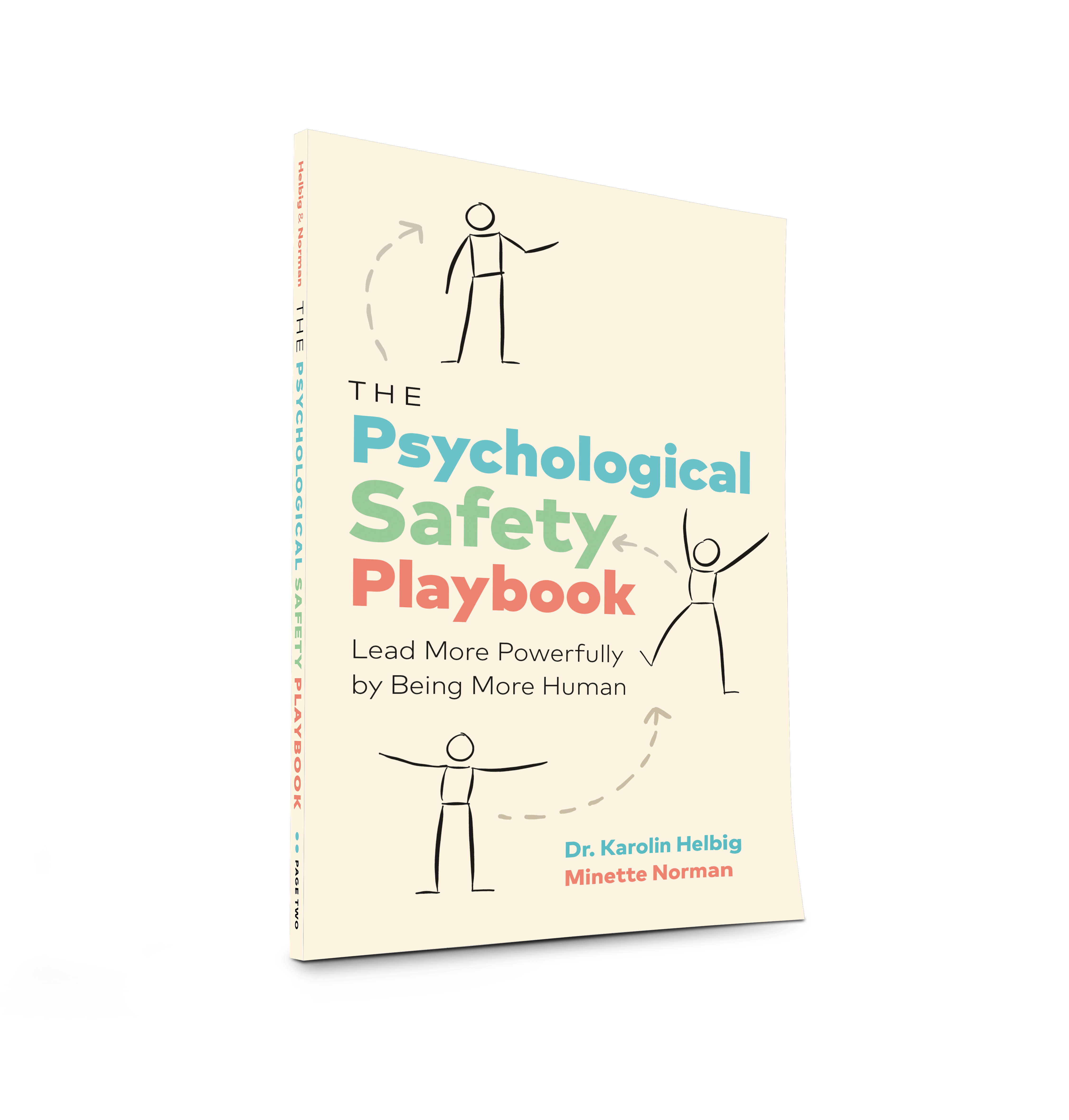
This post is a synthesis from the book The Psychological Safety Playbook, by Karolin Helbig and Minette Norman, sharing some of the key insights on the attitudes and behaviors that nurture safety and creativity in the workplace; empowering teams to thrive.
I hope you enjoy it!
If You Only Takeway One Thing
“When we feel safe, we can ask naive questions, propose wild ideas, and share our emotions. Teams that have a high degree of Psychological Safety are the highest performing teams, the most inclusive teams, the teams that people want to be part of, and the teams that innovate.”
1. Communicate Courageously
- Create an environment where everyone’s viewpoint is welcome and valued.
- Invite healthy dissent to encourage different perspectives.
- Authentically share your emotions with others.
- Openly ask for help and admit what you don’t know as a leader.
- Lead with a sense of humor. Avoid anything that might be offensive, hurtful, or inappropriate.
Courageous communications requires leaders to be vulnerable, to show up authentically, and to acknowledge that we are all works in progress… It takes courage to not have all the answers, to ask for help, to invite dissent, and to laugh at yourself.
2. Master the Art of Listening
- Get curious about other people’s viewpoints and be aware that we all have different perspectives and blind spots.
- Focus. Give the gift of full attention to your conversation partner.
- Articulate what you heard. Use your own words to make sure you really understand.
- Identify and acknowledge the emotions behind the words. Avoid judgment and express empathy.
- Say “tell me more”. Encourage people to explore their perspective fully.
When you ask questions and make sure you get the other person’s point, it makes them feel heard and helps to create an atmosphere of openness and appreciation.
3. Manage Your Reactions
- Model non-defensive reactions. Pause before responding. Reflect on how to respond.
- Notice when you’re experiencing strong emotions. Try to acknowledge or label them.
- Watch out for blind spots or gaps in your personal narrative.
- Recognize when you are being challenged. Thank people for their courage.
- Frame ideas as experiments that your team is putting to the test.
How you react as a leader in situations where you feel defensive can promote or damage psychological safety.
4. Embrace Risk and Failure
- Shift your mindset. Let go of the expectation that success without failure is possible.
- Ask questions. “What can we learn from it”?
- Let go of judgment. Don’t criticize yourself for having difficult emotions.
- Learn. Extract the top insights that you want to take from this experience.
- Make openly sharing failures a positive experience for your team members.
When you start to see failures as learning opportunities, you effectively reduce your fear of failure.
5. Design Inclusive Rituals
- Establish ground rules for your meetings. Remind participants of the rules.
- When you notice an interruption, interject and allow the person to finish.
- Establish the “no one speaks twice until everyone speaks once” rule.
- Establish the habit of checking in with your team members after every meeting.
- Thank people enthusiastically when they are brave enough to share something they learned or something they got wrong.
To create a safe and inclusive working environment as a leader, show appreciation for everyone, including those who challenge you, take risks, and learn from their mistakes.
A Final Note
There’s no perfect end state. Conditions in people’s personal lives impact how they interact at work. Teams evolve. People leave, and new people join. Business conditions are never constant. With each change, you may need to revisit what has worked in the past and what you need to do differently given the current climate.
All content credit goes to the author(s). I’ve shared the bits I’ve enjoyed the most and found most useful.
Cheers ’till next time! Saludos!
Alberto


 Beto's Blog